
Step-by-Step Guide to the Phase 1 ESA Process

Updated: Oct 1

Overview
This article provides a comprehensive Phase 1 ESA process guide, essential for stakeholders in real estate and environmental due diligence. It details the steps involved in a Phase 1 Environmental Site Assessment, including site visits, records review, interviews, and report compilation. The guide highlights common pitfalls, such as misunderstanding the assessment scope and the need for further investigation through a Phase 2 ESA when necessary. It also discusses the importance of staying informed about regulatory changes and emerging contaminants.
Contents
This article focuses on Step-by-Step Guide to the Phase 1 ESA Process; where relevant we also address Phase 1 ESA process guide without making speed or the keyword phrase the sole subject of the piece.
Step-by-Step Guide to the Phase 1 ESA Process
Understanding the complexities of a Phase 1 Environmental Site Assessment (ESA) is crucial for stakeholders involved in real estate and environmental due diligence. A Phase 1 ESA is a critical process used to evaluate the environmental conditions of a property, identifying any potential contamination risks before a transaction occurs. This guide aims to provide a detailed step-by-step understanding of the Phase 1 ESA process, offering insights into why it matters and how it works. This comprehensive Phase 1 ESA process guide will be an invaluable resource for anyone involved in property transactions or environmental risk management.
Understanding the Phase 1 ESA Process
A Phase 1 Environmental Site Assessment serves as a preliminary evaluation of a property's environmental condition. Its primary purpose is to identify any recognized environmental conditions (RECs) that might affect the property's value or use. The scope of a Phase 1 ESA is defined by the ASTM E1527-21 standard, which outlines the necessary steps to assess potential environmental liabilities.
Phase 1 ESAs are governed by various legal and regulatory frameworks, including the Comprehensive Environmental Response, Compensation, and Liability Act (CERCLA). These regulations are designed to protect buyers, sellers, and lenders from unforeseen environmental liabilities. The importance of Phase 1 ESAs in property transactions and environmental risk management cannot be overstated. They provide a baseline for understanding the environmental history of a property, which is essential for making informed decisions.
Qualified environmental professionals, typically with a background in environmental science or engineering, conduct Phase 1 ESAs. Their expertise ensures a thorough evaluation of the property, impacting stakeholders such as buyers, sellers, and lenders by influencing property value and transaction terms.
Step-by-Step Breakdown of the Phase 1 ESA Process
The Phase 1 ESA process involves several critical steps
Initial Site Visit: This step includes a thorough physical inspection of the property to identify visible signs of environmental concerns, such as underground storage tanks (USTs) or hazardous material storage. It's crucial as it sets the groundwork for the entire assessment.
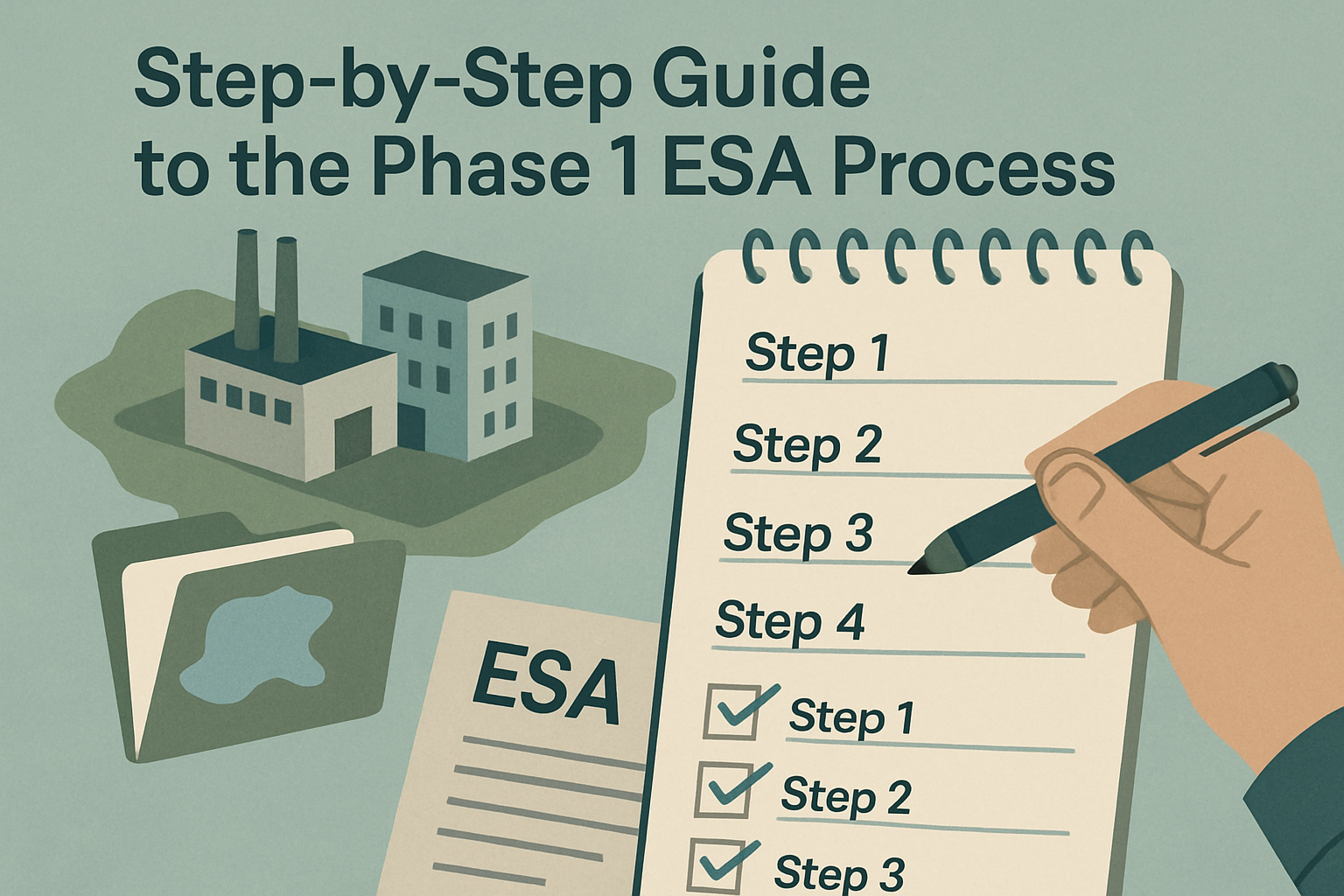
Records Review: This involves examining historical and current records related to the property, including land use records, permits, and environmental databases. These records help assess potential contamination sources and historical land uses.
Interviews: Environmental professionals conduct interviews with current and past property owners, occupants, or neighbors to gather firsthand information about the property's history and potential environmental issues.
Report Compilation: The findings from the site visit, records review, and interviews are documented in a comprehensive report. This report outlines any RECs identified and provides recommendations for further action if necessary.
Potential delays in this process can arise from incomplete records or access issues during site visits. Effective management of these delays involves proactive communication with stakeholders and strategic planning.
Common Mistakes and Pitfalls in the Phase 1 ESA Process
One common mistake is misunderstanding the scope of the assessment. A Phase 1 ESA is not a guarantee that a property is free from contamination; it merely identifies potential issues. Skipping critical steps due to time or budget constraints can lead to incomplete assessments, potentially exposing stakeholders to environmental liabilities.
Failing to follow up on identified environmental issues is another pitfall. If a Phase 1 ESA identifies potential contamination, further investigation through a Phase 2 ESA might be necessary. Thorough documentation is essential, as it supports the findings and recommendations of the assessment.
Communication plays a vital role in avoiding misunderstandings. Clear and consistent communication among all parties ensures everyone understands the scope and significance of the findings.
Comparing Phase 1 ESA Alternatives and Options
In some cases, a Phase 2 ESA might be necessary if the Phase 1 ESA identifies potential contamination. Unlike preliminary assessments, Phase 2 ESAs involve more detailed investigations, including soil and groundwater sampling, to confirm the presence of contaminants.
Alternative environmental assessments may be required for specific industries, such as those involving hazardous materials. When choosing between different environmental consulting firms, consider factors such as expertise, experience, and cost.
Advanced Considerations in the Phase 1 ESA Process
Complex site histories or multiple prior uses can complicate the Phase 1 ESA process. Properties with diverse environmental concerns require a more nuanced assessment approach. Emerging contaminants, such as PFAS, present new challenges that require updated methodologies and continuous education for environmental professionals.
Regulatory changes can significantly impact Phase 1 ESA processes. Staying informed about these changes ensures that assessments remain compliant and relevant. Continuous education and industry engagement are essential for professionals to stay updated on best practices and evolving standards.
Your Next Steps!
To ensure a thorough understanding of the environmental conditions of your property, begin by scheduling a Phase 1 Environmental Site Assessment with a qualified professional. This step is crucial to identify any potential environmental liabilities before proceeding with a property transaction, safeguarding your investment and complying with legal requirements.
Phase 1 Enviro Pros specializes in guiding clients through property transactions and environmental risk management. Whether you're buying, selling, or financing a property, or need industry-specific assessments, we provide expert evaluations tailored to your needs. Contact us to start your Phase 1 ESA process and ensure a smooth and informed decision-making journey.
FAQs
What is the primary goal of a Phase 1 ESA?
The main objective of a Phase 1 ESA is to identify any recognized environmental conditions (RECs) on a property. This assessment helps stakeholders understand potential environmental liabilities before a property transaction.
How long does a Phase 1 ESA typically take?
A typical Phase 1 ESA can take anywhere from two to four weeks, depending on the property's complexity and the availability of records and interview subjects.
What are the costs associated with a Phase 1 ESA?
The cost of a Phase 1 ESA varies based on factors such as property size, location, and complexity. Generally, prices range from $2,000 to $5,000. It's advisable to obtain a quote for an accurate estimate.
Can a Phase 1 ESA be waived, and under what circumstances?
A Phase 1 ESA might be waived if the property's history is well-documented and free from environmental issues. However, this decision should be made cautiously, considering potential liabilities.
How often should a Phase 1 ESA be updated?
Phase 1 ESAs should be updated every one to two years, especially if there are significant changes in property use or surrounding land use that could affect environmental conditions.
What happens if environmental issues are found during a Phase 1 ESA?
If potential environmental concerns are identified, further investigation through a Phase 2 ESA may be necessary. This step involves detailed testing to confirm and assess the extent of contamination.
Why is a Phase 1 ESA important for lenders?
Lenders require Phase 1 ESAs to protect their financial interests by identifying potential environmental risks that could affect property value and loan terms.
How do Phase 1 ESAs differ from Phase 2 ESAs?
Phase 1 ESAs are preliminary reviews to identify potential concerns, while Phase 2 ESAs involve detailed testing to confirm contamination and assess its extent.
What are the limitations of a Phase 1 ESA?
A Phase 1 ESA cannot confirm the absence of contamination; it only identifies potential issues. Further investigation may be needed if concerns are found.
Conclusion
A thorough Phase 1 ESA process is vital for mitigating environmental risks associated with property transactions. By understanding and conducting an effective assessment, stakeholders can make informed decisions and protect themselves from unforeseen liabilities. For tailored advice and next steps, consulting with environmental professionals is highly recommended. For more information, consider exploring additional resources, such as our Phase 1 vs. Phase 2 guide or our after a Phase 1 assessment article.
Updated September 2026
Steve Madina — CEO
Founder of Savvy Inspections and Phase 1 Enviro Pros, specializing in commercial property inspections and environmental due diligence. He helps investors and real estate professionals uncover hidden risks—such as environmental concerns and permit issues—before they impact a deal. His work focuses on delivering clear, actionable insights that support smarter, more confident property decisions.
Comments